
Most couples pay a wide range for wedding photography depending on tier, with many landing in the mid-tier range around $3,500 to $6,500 according to The Wedding Dossier's 2026 analysis. A practical rule of thumb: budget close to 9% of your total wedding spend for photography, in line with Zola's guidance. Some wedding photography vendors work with couples across several of these tiers and can build a quote you can compare line by line against any other vendor.
TL;DR:
- Most couples spend between $3,500 and $6,500 for full-day wedding photography, with large weddings and destination events increasing costs further.
- Overtime fees can add $400 to $800 per hour, and adding a second shooter typically costs an extra $500 to $1,500, significantly affecting the final price.
- Additional costs beyond the base rate include travel, lodging, albums, prints, and applicable taxes or gratuity, often totaling several hundred to thousands of dollars extra.
- Comparing quotes requires verifying coverage hours, number of shooters, deliverables, and travel fees, rather than focusing solely on the initial price.
- Budgeting around 9% of total wedding expenses for photography helps set realistic expectations within a specific tier of service.
Table of Contents
- Price tiers: what budget, mid, premium, and luxury actually buy
- What makes a photography quote go up or down
- The extras that rarely show up in the base price
- How to set a realistic photography budget
- When your photos actually arrive, and how many you'll get
- What couples get wrong when budgeting for photography
- Photography and video packages from Glenwood Weddings
- Where these figures come from
- Sources
- FAQ
Price tiers: what budget, mid, premium, and luxury actually buy
Treating photography cost as a single average hides more than it reveals. A photographer charging $1,800 and one charging $15,000 are not selling variations of the same product, they are selling different scopes of work. The Wedding Dossier's tiered breakdown gives a clearer picture of what you actually get at each level.
- Budget ($1,500 to $3,000): Usually a solo shooter, 4 to 6 hours of coverage, a smaller edited gallery, and minimal or no album, according to The Wedding Dossier.
- Mid-tier ($3,500 to $6,500): Full-day coverage (8 hours or so), often a second shooter, an online gallery with several hundred edited images, and sometimes an engagement session bundled in.
- Premium ($7,000 to $12,000): Extended hours, an experienced lead photographer with a developed style, a second shooter as standard, and a printed album included rather than sold as an add-on.
- Luxury ($12,000 to $25,000 or more): Multi-day or destination availability, a full creative team, custom album design, and the largest image counts.
Median starting prices across the dataset cluster near $3,000, which explains why so many couples feel surprised when quotes climb higher. That median is a starting point, not a finished package, and photographers who do not publish prices upfront tend to land toward the top of their tier.
Most couples end up in the mid-tier because it balances full-day coverage with a manageable price, and it is the tier where a second shooter and a real album first become standard rather than optional.

Guest count matters here too: a 200-guest wedding with a large bridal party generally needs the extra coverage a second shooter provides, while an intimate ceremony of 30 guests can often work well with a budget or low mid-tier package.
What makes a photography quote go up or down
A handful of variables account for most of the spread between a $2,000 quote and a $9,000 one, and several of them are within your control.
- Coverage hours: Packages are typically sold in blocks (6, 8, 10 hours), and pre-booked additional hours cost less than day-of overtime, which often runs $400 to $800 per hour depending on tier, per The Wedding Dossier.
- Second shooter or team size: Adding a second photographer typically adds $500 to $1,500 to the total, a cost that pays off at larger weddings where getting-ready photos and ceremony shots happen at the same time.
- Experience and style: A photographer with a strong portfolio and years of editing experience charges more per hour of shooting and per hour of retouching, which is reflected in premium and luxury pricing.
- Season, date, and travel: Peak season Saturdays and major metro markets carry a premium, and any travel outside a photographer's home city adds mileage, lodging, or a flat travel fee.
Pro Tip: Ask every photographer for their overtime rate before you sign anything: a cheap base package with a high overtime fee can end up costing more than a pricier package with generous included hours.
The extras that rarely show up in the base price
The number on a photographer's pricing page is rarely the number on your final invoice. Base packages commonly exclude the following, and each can add real money to your total.
- Travel and lodging: Destination weddings or any venue outside a photographer's service area typically mean mileage fees, flights, or a hotel room added to the invoice.
- Overtime: Running past your booked hours is billed at a premium rate, which is why pre-booking a realistic number of hours is usually cheaper than adding time on the day.
- Albums and prints: Parent albums, additional prints, and album upgrades are often priced separately and can represent a large share of a premium package's total cost.
- Sales tax, gratuity, and licensing fees: Sales tax applies in most states, tipping is customary but optional, and a print release (permission to print your own images) is sometimes bundled and sometimes an add-on.
Line items like these can add several hundred to several thousand dollars beyond the base fee, according to The Wedding Dossier, so ask for a full itemized quote before comparing prices across vendors.
How to set a realistic photography budget
Start with a percentage, then adjust for your priorities. Applying roughly 9% of your total wedding budget to photography gives you a workable target, based on Zola's cost guidance, and The Knot's budgeting tools can help you adjust that figure for your specific region.
Once you have a target number, compare quotes on the same terms rather than by bottom-line price alone.
- Confirm total coverage hours and what happens if the day runs long.
- Ask whether a second shooter is included or billed separately.
- Get exact deliverable counts: number of edited images, whether an album is included, and turnaround time.
- Clarify travel fees upfront if your venue is outside the photographer's usual service area.
- Use a wedding day questionnaire to give photographers the same information so their quotes reflect the same scope.
Negotiation is reasonable when you are removing something, not just asking for a lower price. Dropping an album, shortening hours, or skipping a second shooter are fair ways to bring a premium photographer's quote closer to your target.
When your photos actually arrive, and how many you'll get
Most photographers deliver fully edited galleries within 4 to 8 weeks, with rush delivery available for an added fee, per The Wedding Dossier.
That range matters when you are comparing a $4,000 quote against a $5,500 one: a few hundred fewer images can mean a meaningfully smaller gallery of your day.
Delivery usually comes through an online gallery, sometimes paired with a USB drive or prints depending on the package. A print release, when included, gives you permission to print your own images at a lab of your choice. If you've added a physical album, expect design proofing and shipping to extend your total delivery timeline by several additional weeks beyond the initial gallery delivery.

What couples get wrong when budgeting for photography
The most common mistake is anchoring to a single average number instead of a tier, then feeling blindsided when a quote for full-day coverage and a second shooter comes in well above it. The second is skimming the contract: overtime rates, cancellation terms, and what happens if the photographer is unable to shoot are all worth reading closely before signing. The third is underbudgeting for travel and overtime, both of which are easy to estimate in advance if you ask.
A simple set of contract questions protects you more than chasing the lowest bid: what's the overtime rate, who owns the images, when do you receive the print release, and what's the backup plan if your photographer gets sick.
— Bo
Photography and video packages from Glenwood Weddings
Glenwood Weddings builds wedding photography and photo-and-video packages around each couple's own story rather than a fixed formula, with customizable options and recognition including awards from The Knot. 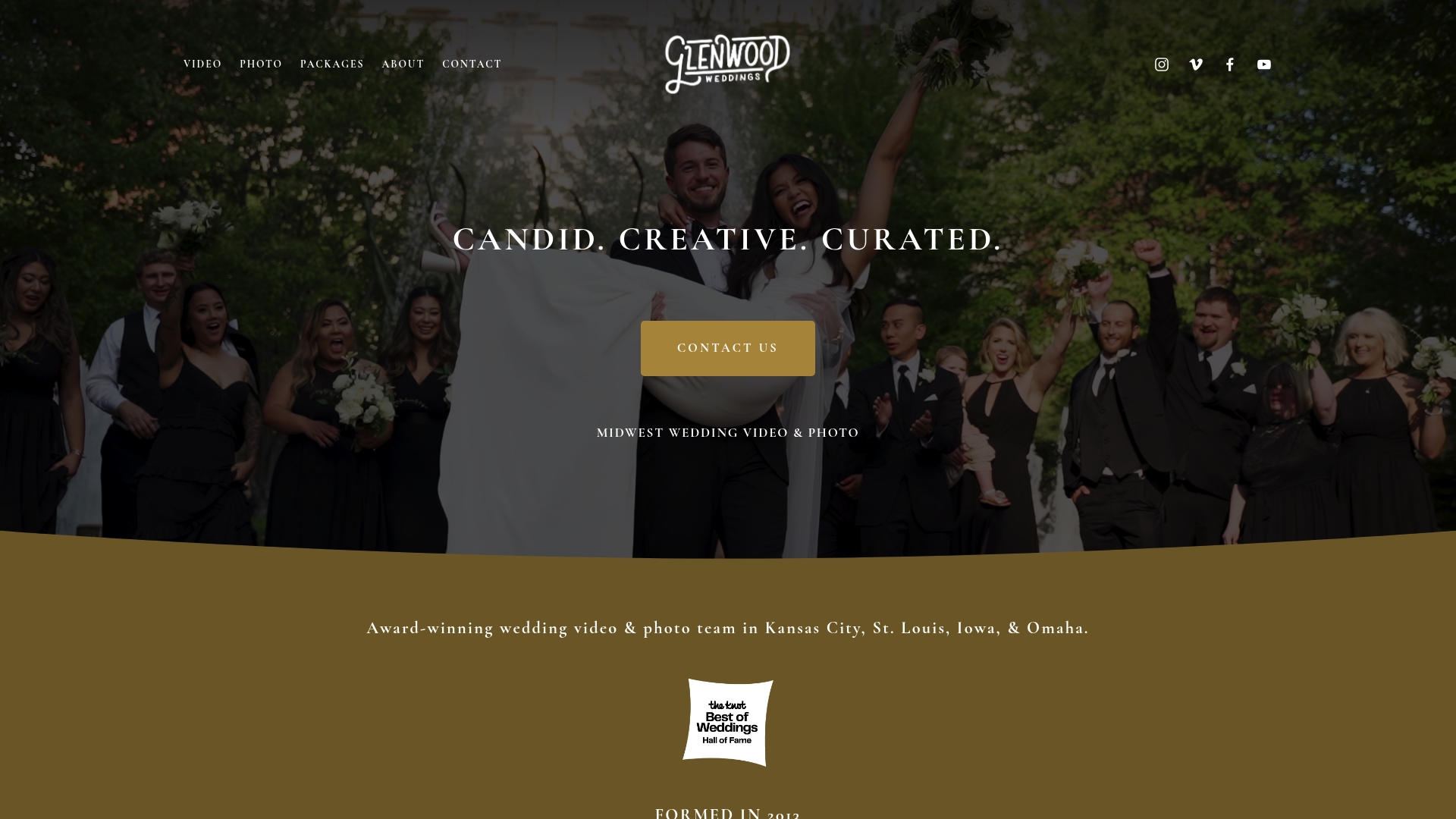
Couples across the Midwest can also add an engagement photography session to their package. To see current pricing and build an apples-to-apples comparison against other quotes, visit the investment page and request a quote.
A quote worth comparing should list:
- Total coverage hours and overtime rate.
- Number of shooters and whether a second shooter is included.
- Exact deliverables: edited image count, album inclusion, and turnaround time.
Where these figures come from
- The Wedding Dossier's 2026 tiered pricing analysis, covering budget through luxury ranges and median starting prices.
- Zola's wedding photographer cost guide, for national average spending and the percent-of-budget rule.
- The Knot's average cost breakdown, for regional variation and package structure context.
- Zola's budgeting guide, for tools to localize a national estimate and a helpful wedding vendor cost breakdown for allocating savings across your full vendor list.
Sources
- How Much Does a Wedding Photographer Cost in 2026? · The Wedding Dossier
- Wedding Photographer Cost: What Couples Really Pay - Zola Expert Wedding Advice
- The Average Wedding Photographer Cost, Explained - The Knot
FAQ
Is $4,000 a lot to pay for a wedding photographer?
No, $4,000 sits within the typical mid-tier range and close to the national average of about $4,400 reported by Zola. At that price, expect full-day coverage, likely with a second shooter and a sizable edited gallery.
How much should I budget for wedding photography?
A common guideline is around 9% of your total wedding budget, based on Zola's cost index. From there, match that dollar figure to a tier (budget, mid, premium, or luxury) to set realistic expectations for hours and deliverables.
How much does a wedding photographer cost for 2 hours?
Short sessions fall below most full packages since photographers typically sell coverage in half-day or full-day blocks rather than by the hour. Expect pricing closer to the budget tier, roughly $1,500 to $3,000, though any hours booked outside a standard package may carry a premium rate depending on the photographer.
What is the 20-60-20 rule in photography?
This is a shot-composition guideline some photographers use to balance formal portraits, candid moments, and detail shots across a wedding day, rather than a pricing or budgeting rule. Definitions vary by photographer, so ask directly how they structure their shot list if this matters to you.
What is typically included in a wedding photography package?
A standard mid-tier package usually includes several hours of coverage, an online gallery of edited images, and often a second shooter, according to The Wedding Dossier. Albums, engagement sessions, and prints are frequently available as add-ons rather than automatic inclusions.