
If you want the exact sound of your dad's voice during the ceremony and the vows you're about to promise, book a videographer. If you want a stack of shareable clips online before the reception ends, hire a content creator. Most couples who want both need to book both, because the two roles produce genuinely different footage using different gear and different priorities.
TL;DR:
- Videographers focus on creating a narrative-driven film with high-quality audio, multiple cameras, and a polished editing process, usually taking six to twelve weeks for delivery.
- Content creators prioritize fast, vertical clips for social media, often used within 24 to 48 hours, with limited public audio of vows or speeches.
- The core technical difference is in audio equipment and camera systems, with videographers using lavalier mics and cinema cameras, while content creators rely on phones or compact gear for speed.
- Couples should book both if they want a legacy film and shareable clips, but need to coordinate camera zones and share the same day-of contact to avoid conflicts.
- Always get detailed scope, audio approach, and delivery timelines in writing before signing contracts, especially clarifying raw footage access, licensing, and revision policies.
Table of Contents
- Content Creator vs Videographer: What Actually Separates Them?
- What a Wedding Videographer Does
- What a Wedding Content Creator Does
- Technical Differences That Actually Matter
- Deliverables, Turnaround, and Rights: What You'll Actually Receive
- Price Factors and Ballpark Ranges
- The Decision Test: Videographer, Content Creator, or Both?
- What to Ask Before You Book: Vendor Checklist and Contract Items
- How a Professional Studio Balances Legacy Film and Social Deliverables
- A Straight Answer From Someone Who's Watched This Decision Play Out
- Sources
- FAQ
Content Creator vs Videographer: What Actually Separates Them?
The confusion starts with the job title itself. "Content creator" has become a catchall term that can mean anything from a person with a phone and a ring light to a full production team shooting vertical video with cinema lenses, according to Coursera's breakdown of content creator roles. That's the first thing to understand: the label tells you almost nothing about what you'll actually receive.
A videographer, by contrast, is a defined craft with a defined output. The role centers on capturing your wedding day as a continuous story, using dedicated audio equipment, multiple cameras, and a post-production process built around narrative structure rather than trending audio clips. Where a content creator optimizes for speed and shareability, a videographer optimizes for permanence.
Neither role is better in the abstract. They're built for different outcomes, and understanding those outcomes is the whole game.
What a Wedding Videographer Does
A wedding videographer's job is to turn eight or ten hours of raw moments into a film with a beginning, middle, and end. PPA contributor Jeff Kent puts it bluntly: video work demands pre-production, planned shot sequences, lighting decisions, and real audio engineering. Saying a photographer and videographer "both use cameras" badly undersells what's actually happening on a wedding video set.
That production discipline shows up in what you receive. A typical videographer's scope of work includes:
- A cinematic highlight film edited around a narrative arc, not just a chronological clip reel
- Full or partial ceremony coverage with clean, isolated audio for vows and readings
- A speeches or toasts edit capturing every word, not just the laugh lines
- Raw footage access, though policies on this vary significantly by studio
- Multi-camera angles synced in post-production for coverage during key moments
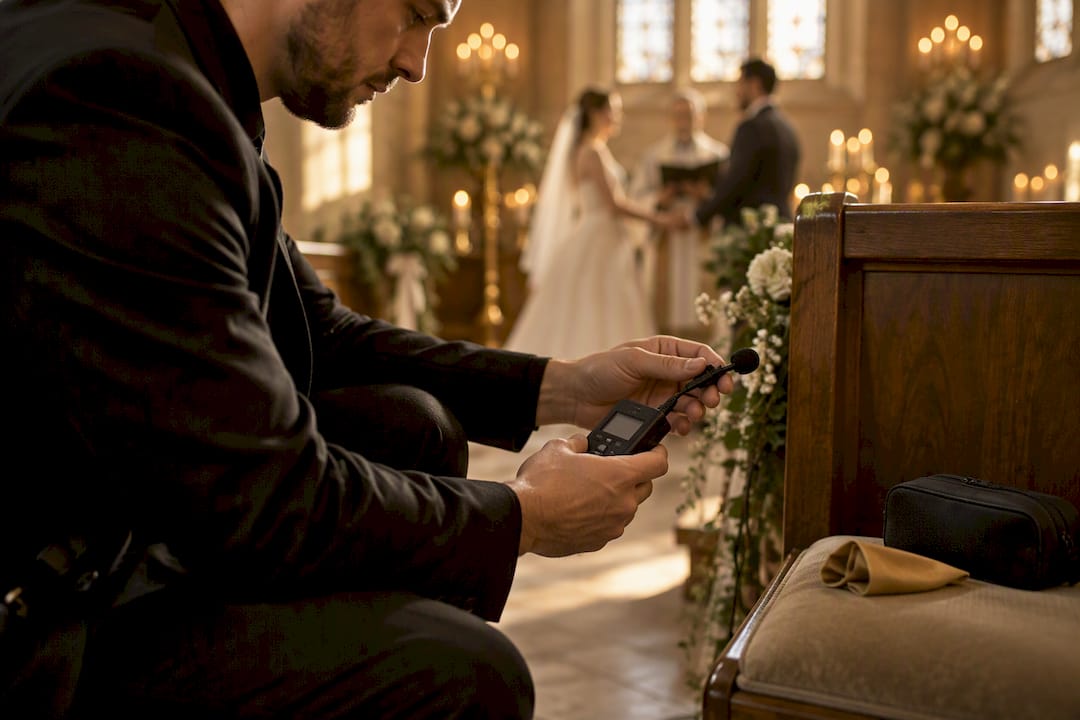
The workflow behind those deliverables starts weeks before the wedding. A videographer typically walks the venue, plans shot lists around your ceremony timing, and coordinates audio placement so an officiant's lapel mic doesn't pick up wind noise. On the day itself, that often means two or more camera operators working in tandem, one on wide coverage and one moving for close, intimate shots.
Pro Tip: Ask any videographer you're considering to send you a full, unedited ceremony or speech clip, not just a polished highlight reel. Highlight reels are designed to sell you on emotion. A raw clip tells you whether the audio and framing will actually hold up when it matters.
Building this skill set takes time. Many wedding videographers started as photographers who added video as a second service, learning audio and pre-production gradually through second-shooting and hands-on practice. That learning curve is exactly why experienced videographers charge what they charge and why their footage sounds and looks different from a phone recording of the same moment.
What a Wedding Content Creator Does
A wedding content creator's job is speed and shareability, not archival storytelling. Their entire workflow is built to produce vertical, platform-ready clips, often edited to trending audio, and delivered within days rather than months. If your priority is having something to post before the cake is cut, this is the role built for that.
The deliverables reflect that priority. Expect:
- Short-form vertical clips formatted for Instagram Reels or TikTok
- Fast turnaround, sometimes within 24 to 48 hours of the event
- Music-led edits built around a trending song rather than continuous ambient audio
- Candid, behind-the-scenes style sequences (getting ready, reactions, dance floor energy)
- A phone or compact camera setup that prioritizes mobility over image depth
One tradeoff nobody mentions upfront: because the edit is music-led, you typically won't get clean audio of your vows or your best man's toast. Content creators often lean on current platform-native editing tools like CapCut-style workflows built for speed, not multitrack sound isolation. The final product feels alive and current, but it isn't designed to preserve the exact words spoken during your ceremony.
This makes content creators an excellent fit for social-first couples, informal celebrations, or weddings where the reception energy matters more than the ceremony script. It's also a smart add-on for couples who already have a videographer locked in for the legacy film and want extra coverage purely for social media momentum. Some vendors even build their entire booking flow around fast consultations, similar to how wedding vendors use scheduling tools to move couples from inquiry to booked in a single call. Speed is baked into the business model, not just the edit.
Technical Differences That Actually Matter
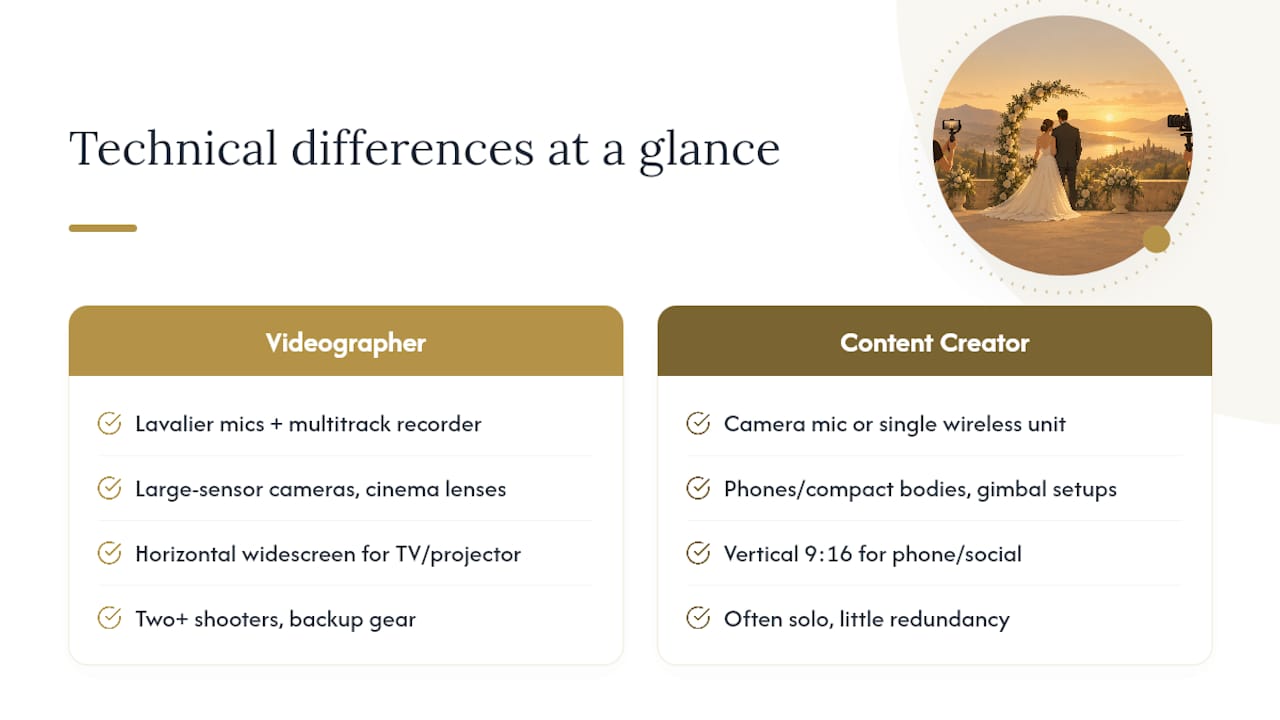
The gap between these two roles isn't philosophical. It's technical, and it shows up the moment you compare gear lists side by side.
1. Audio capture. A videographer typically runs lavalier microphones on the officiant and groom, plus a separate multitrack recorder as backup, capturing clean dialogue that can be mixed independently from ambient sound. A content creator usually relies on a camera's built-in mic or a single wireless unit, then layers music over the final cut to smooth out inconsistent sound. That single decision is why one final product lets you hear your grandmother's toast word for word, and the other buries it under a pop song.
2. Camera systems. Videographers shoot on larger-sensor cameras with cinema-style lenses chosen for low light and shallow depth of field. Content creators often shoot on phones, compact mirrorless bodies, or gimbal-mounted setups built for speed of movement rather than image depth.
3. Orientation and aspect ratio. Videographers shoot horizontal, widescreen footage meant for a television, projector, or archival file you'll watch again in twenty years. Content creators shoot vertical, 9:16 footage built for a phone screen and a five-second attention span. You genuinely cannot repurpose one for the other without cropping and losing quality.
4. Crew size and redundancy. A videography team often includes two or more shooters plus backup gear, meaning a dead battery or failed card doesn't sink the day's coverage. A content creator frequently works solo, which keeps costs down but leaves less margin for equipment failure.
5. Drone and lighting planning. Videographers frequently coordinate off-camera lighting for receptions and plan drone shots around venue restrictions in advance. Content creators tend to work with available light and skip drone coverage entirely.
Audio is where low-cost vendors most often fail. Without lavalier mics and a dedicated recorder, ceremony and speech audio gets mixed under music or lost to ambient noise, which is exactly the failure point couples discover only after the wedding is already over. That single gap explains most of the disappointment couples report after choosing a vendor based on price alone.
Deliverables, Turnaround, and Rights: What You'll Actually Receive
Highlight films typically run three to seven minutes. Feature films or full documentary edits run anywhere from twenty minutes to well over an hour, depending on how much ceremony and speech content you request. Social content creators, by comparison, usually deliver a batch of fifteen to sixty second vertical clips rather than one long film.
Turnaround timelines differ just as sharply. A content creator might hand over a teaser clip within a day or two of the wedding. A videographer's full film, especially a documentary-style edit with synced multicamera audio, can take six to twelve weeks depending on the studio's season and backlog. That gap catches a lot of couples off guard, so ask about both preview and final delivery timing before you sign anything.
Before you book, confirm these specifics in writing:
- Whether raw footage or full-resolution masters are included or available at an added cost
- Music licensing terms, since a song cleared for a personal highlight reel isn't automatically cleared for public social posting or commercial use
- Delivery format (digital download, private online gallery, or physical drive) and expected resolution
- How many rounds of revisions are included before extra fees apply
- The exact deadline for final delivery, not just an estimated range
A vendor's process for handling scope, timelines, and revisions predicts your satisfaction far better than any marketing language on their website. Studios that spell out these details clearly, like the delivery information on Glenwood Weddings' full-length films page, give you something concrete to compare against a vaguer competitor's promise.
Price Factors and Ballpark Ranges
Price differences between videographers and content creators come down to a handful of variables: total coverage hours, number of shooters on-site, how much time goes into editing, whether dedicated audio equipment is used, music licensing costs, travel distance, and the season you're booking (peak wedding months command premium rates almost everywhere).
Videography packages that include full-day coverage, multiple shooters, and a documentary-style edit tend to sit in the low thousands of dollars. As a reference point, Glenwood Weddings lists video packages from $2,380 to $4,460, which reflects the range you'll typically see for comparable coverage hours and deliverables at other established studios. Content creator packages, especially those limited to a few hours of social-clip coverage, often run lower because they involve less crew, less editing time, and no dedicated audio setup.
Watch for these red flags in unusually cheap offers:
- No mention of backup equipment or a second shooter
- Vague language around "edited highlights" with no specific runtime or shot count
- No clarity on whether ceremony or speech audio is even captured
- Music licensing left unaddressed entirely
- A quote with no itemized breakdown of hours, deliverables, or revision terms
Pro Tip: Request an itemized scope from every vendor you're comparing, not just a bottom-line price. Two quotes that look similar on paper can represent wildly different coverage once you break down hours, shooters, and what's actually included in the edit.
Comparing apples to apples means comparing scope, not just the number on the invoice.
The Decision Test: Videographer, Content Creator, or Both?
Here's the exercise that cuts through the noise faster than any pros-and-cons list: picture the exact moment you'll want to relive in ten years. If that moment is your father's exact words during the toast, or the sound of your own voice shaking during your vows, prioritize a videographer. If the moment you're picturing is a fun, high-energy clip you'll post the week of the wedding, prioritize a content creator.
- Legacy film matters most. Book a videographer with dedicated audio capture and a full ceremony edit.
- Social buzz matters most. Book a content creator for fast, vertical, music-driven clips.
- Both matter equally. Book both, and confirm they can work the same day without stepping on each other's shots.
- Budget is tight and you can only pick one. Choose based on which moment you'd regret losing more: the vows, or the shareable reel.
A few common scenarios make this concrete:
- An intimate elopement with no speeches leans toward a content creator, since there's less continuous dialogue to capture.
- A formal ceremony with religious readings or personalized vows leans hard toward a videographer.
- A reception-heavy wedding with a big dance floor and high energy benefits from a content creator layered on top of core videography coverage.
- A couple building a personal brand or business online may want a content creator as the priority hire, with a lighter videography package as backup.
If you do hire both, specify camera zones in advance so you don't end up with two people fighting for the same angle during the first kiss. Assign a single day-of contact to coordinate between them, and put in writing which vendor gets priority access for ceremony audio capture, since only one lavalier setup can realistically run at a time.
What to Ask Before You Book: Vendor Checklist and Contract Items
Every conversation with a potential vendor should produce a written answer to these items before you sign anything:
- Total coverage hours and specific locations included
- Whether the full ceremony and full speeches are covered, not just excerpts
- Camera and audio approach, including whether lavalier mics are used
- Vertical clips, horizontal film, or both
- Number and length of final edited pieces you'll receive
- Raw footage policy and whether masters are included
- Music licensing terms for both personal and public/social use
- Delivery method, file format, and firm deadline
- Number of revision rounds included before additional charges apply
- Backup equipment and a contingency plan if a shooter is unavailable
- Travel fees for your specific venue
- Written permission for you to share the final work publicly
Pro Tip: Ask to hear a full, unedited excerpt of a past ceremony or toast, not just a highlight reel. Highlight reels are curated to sound perfect. A raw excerpt tells you the truth about audio quality when things get chaotic.
Also confirm the vendor carries liability insurance, since many venues now require it, and get cancellation or postponement terms in writing. If you're coordinating multiple creatives on the day, a shared timeline document, like the planning tools in Glenwood Weddings' wedding day questionnaire, keeps everyone working from the same schedule instead of guessing at overlap.
How a Professional Studio Balances Legacy Film and Social Deliverables
A well-run studio doesn't treat legacy film and social content as competing priorities. Ceremony audio and the emotional arc of the day get protected first through dedicated mic setups and a shot list built around key vows and speeches, while faster social previews get pulled from the same coverage without compromising the main edit.
The studio has built a reputation for dual output, earning recognition from The Knot alongside a strong run of five-star client reviews for both the finished films and the experience of working with the team. The studio's customizable packages reflect a simple idea: couples shouldn't have to choose between a film that ages well and clips that spread fast when the right process can produce both.
Whichever vendor you ultimately hire, borrow this checklist from studio practice: confirm dedicated ceremony audio is captured regardless of what social content is also promised, ask how quickly you'll see a preview versus the final film, and get the split between legacy and social deliverables spelled out in your contract before booking.
A Straight Answer From Someone Who's Watched This Decision Play Out
Couples overthink the job title and underthink the deliverables list. Nobody regrets asking a vendor for a raw audio clip before booking, and plenty of couples regret skipping that step. The ten-year test works because it forces you to stop shopping on vibes and start shopping on what you'll actually rewatch.
If there's one piece of advice worth repeating, it's this: get the scope in writing, confirm the audio approach specifically, and don't let a trendy job title substitute for a clear deliverables list.
— Bo
Sources
The PPA's guide to wedding photography and videography covers industry audio standards and the decision test referenced throughout this piece. Coursera's content creator jobs overview explains why that job title spans so many different roles. For studio examples of legacy and social-ready deliverables, see Glenwood Weddings' wedding films and inquiry questionnaire pages.
- Wedding Photography and Videography Together | Professional Photographers of America
- 8 Content Creator Jobs and What You Need to Get Started | Coursera
FAQ
Is AI Going to Replace Videographers?
No, not for the parts couples care about most. AI tools can speed up editing tasks, but capturing clean ceremony audio, directing shots in real time, and building an emotional narrative from a live event still require a human videographer on-site.
Does a Content Creator Get Paid for Wedding Work?
Yes, content creators are typically paid a flat rate or package fee for wedding coverage, similar to other wedding vendors. Rates vary widely based on hours, deliverables, and experience, since the title itself covers such a broad range of services and skill levels.
What Pays More, Videography or Photography?
Pricing depends more on package scope than on which role you compare, though full-day videography with multiple shooters and dedicated audio equipment often commands rates comparable to or higher than photography-only packages. Glenwood Weddings' video packages range from $2,380 to $4,460, reflecting the added crew and editing time video work requires.
What's Harder, Videography or Photography?
Videography generally has a steeper learning curve because it demands pre-production planning, audio engineering, and post-production editing skills beyond still photography. Many videographers built those skills gradually by second-shooting video alongside established photographers before taking on lead roles.
Should We Hire Both a Videographer and a Content Creator?
Hire both if legacy film and social buzz matter equally to you, but confirm camera zones and a single day-of contact so the two vendors don't compete for the same shots. Give one vendor clear priority for ceremony audio capture, since only one dedicated mic setup can realistically run during the vows.